

In English
Transmission, Translation, Transfer – Inheriting and passing on culture
Theatre is a transient art form. The only "relicts" of historical theatre are theatre texts, programmes, stage and costume sketches or objects from the performances, telling little about what was actually happening on stage. In puppet theatre, this gap between the performance and its traces seems to be smaller, as objects and materials are in the centre of this art form. But a puppet in a museum show case is not a theatre puppet anymore – movement and puppeteer are missing.
The symposium is focussing on the conservation of cultural heritage but also on its passing on. Theatre scholars, museum experts, and puppet theatre artists will discuss the complex questions of transmission, translation, and transfer of creation and its artefacts.
The symposium is a cooperation of Münchner Stadtmuseum, Puppet Theater & Fairground Attractions Department and Department of Theatre Studies, Ludwig-Maximilians-Universität München.
Programme:
9 a.m. Welcome and Coffee
9.30 a.m. Keynote
Dr. Helmut Groschwitz, Institute for European Ethnology at the Bavarian Academy of Sciences and Humanities, Munich
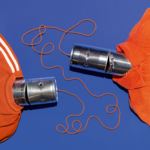
Strings of Transmission – Intangible Cultural Heritage and Puppet Theater
With the adoption of the Convention for the Safeguarding of the Intangible Cultural Heritage (2003), UNESCO established a legal framework that broadens the understanding of heritage to include ephemeral and fluid practices: oral expressions, performing arts, rituals and festivals, traditional craftmanship, and knowledge about nature. In a paradigmatic shift, the focus is now on the people involved, the transmission of knowledge and skills, and the mutability of cultural practices. This lecture outlines the criteria and challenges of this approach as ‘Living Traditions’ or ‘Living Heritage’, as derived from the cultural-policy framework of the Convention, and relates these to existing discursive and relational concepts of ‘tradition’. It also addresses the dealing with ‘dark’ and ‘contested’ heritage.
11 a.m.
Prof. Dr. Meike Wagner, LMU München
What Remains? Puppetry in Transition
When an artist’s career draws to a close, there are several ways for them to save their artistic legacy from oblivion. One option is to have established oneself as a "major artist" of national or international stature—thereby securing a place in the cultural memory that comes with the guaranteed preservation of one’s work in a museum. Another is to have trained students who adopt one’s artistic principles, thus carrying the artistic thread forward. Or, one might have dedicated oneself to a tradition, becoming part of a genealogy of those who previously upheld this tradition-based art form. While this may sound like a process of solid transmission, in reality, nothing is more precarious or volatile than this moment of artistic transition…
Dr. Laurette Burgholzer
Lawless and intangible: tradition, innovation and inheritance in contemporary puppetry
What embodies tradition and innovation in puppetry? Clichés, value judgments, processes of selection, and cultural-political strategies shape the way this field of tension is perceived. Examining current developments and puppetry schools—viewed as laboratory-like zones for negotiating transmission and transformation—the lecture will explore the unregulated yet vibrant space where continuities and the renunciation of heritage, memory loss and reconnection, all play out within puppet theater practices.
Dr. Antonia Napp, KOLK 17 – Theater und Museum, Lübeck
Falling prey to oblivion and making decay fade from memory – on museum work as an art of mnemonics
The museum, as the concept of a place for preserving, safeguarding and retaining, stands in stark contrast to the performing arts. Transient, process-oriented and context-dependent, they are difficult to pin down. This challenge thus pushes museum work to its limits, but at the same time offers an opportunity to further develop museums as institutions. At KOLK 17 Puppet Theatre & Museum, we are slowly feeling our way towards possible solutions through our work with the collection. How do we counter processes of forgetting, or must we even contribute to them ourselves from time to time? And how do we deal with the decay of objects when this affects not only their materiality in the traditional sense, but above all their performative context?
2 p.m.
"Tradition IS innovation” – Change and transfer of knowledge in traditional Puppetry in India
Talk with Anurupa Roy, Katkatha Puppet Arts Trust, New Delhi, N.N.
Host: Mascha Erbelding, Puppet Theater & Fairground Attractions Department of Münchner Stadtmuseum
"Tradition IS innovation, otherwise it would not survive." (Anurupa Roy)
In India there are generational practices in puppetry, where the form has been passed down within the family for in some cases over 12 generations. These traditions mainly survived in rural regions. The talk will discuss the following questions: How did and does tradition develop in India? How can traditional and "contemporary" puppeteers work together? And which forms of funding would be needed?
4 p.m.
Re: Schicklgruber – When a play passes on
Talk with Neville Tranter (Stuffed Puppet Theatre), N.N.
Host: Seta Guetsoyan, Figurentheater-Kolleg, Bochum
In 2025 Nikolaus Habjan restaged the play "Schickgruber" by Neville Tranter and Van Veldman, which originally premiered in 2003 as a Solo-Puppet Show with Neville Tranter. How can a puppet show be transfered? How did the cooperation work between the generations? Which changes were necessary and possible after 20 years?
9–18 Uhr mit Pausen
Eintritt frei, Anmeldung über rausgegangen.de | Ort: IBZ München – Internationales Begegnungszentrum der Wissenschaft, Amalienstraße 38, 80799 München
Weitere Informationen finden Sie auf der Website der Gesellschaft zur Förderung des Puppenspiels e.V.