

A Dirndl’s Long Journey to Münchner Stadtmuseum
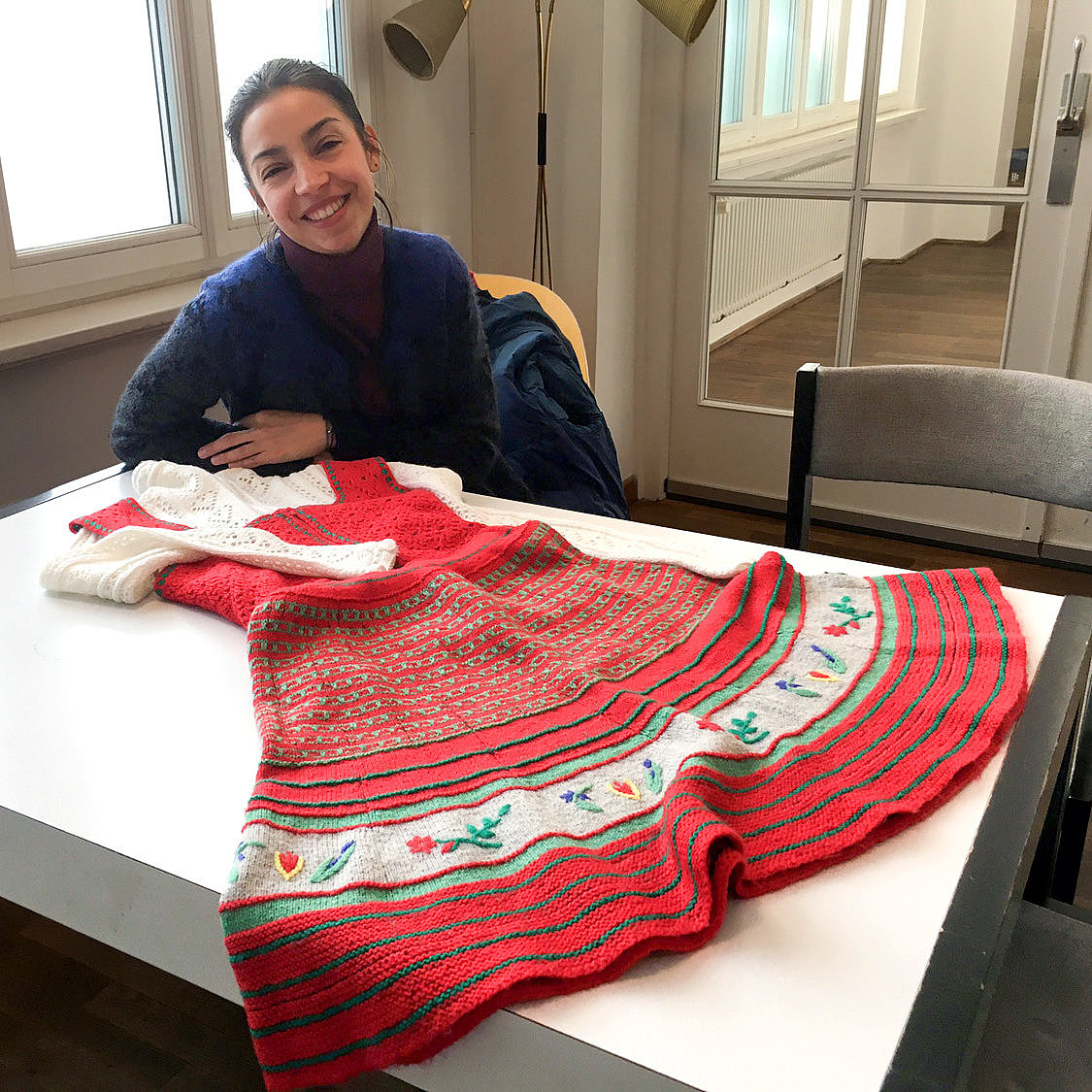
Email correspondence between Marisa Wolf and Dr. Isabella Belting, Head of the Fashion/Textiles/Von Parish Costume Library of Münchner Stadtmuseum
Email from Marisa Wolf sent February 8, 2023
“Dear Ms. Belting, The dirndl I sent you a photo of was made by my great-grandmother Gertrud. She originally made it for her daughter Elke, my grandmother, who was living in Ethiopia at the time. My grandmother was a great fan of Bavarian traditional dress even though she wasn’t born in Bavaria. In any case, she went on to wear this dirndl for the yearly Oktoberfest celebrations at the Hilton Hotel in Addis Ababa.
Perhaps you might like to look at it more closely? I thought it was a shame to leave it gathering dust in the cupboard.”
Email from Isabella Belting sent February 10, 2023
“Dear Ms. Wolf,
The dress looks interesting, especially in conjunction with your story.
We would be delighted to add the dirndl to our fashion collection. The more information (and even photos) you can offer the better!”
Email from Marisa Wolf sent February 17, 2023
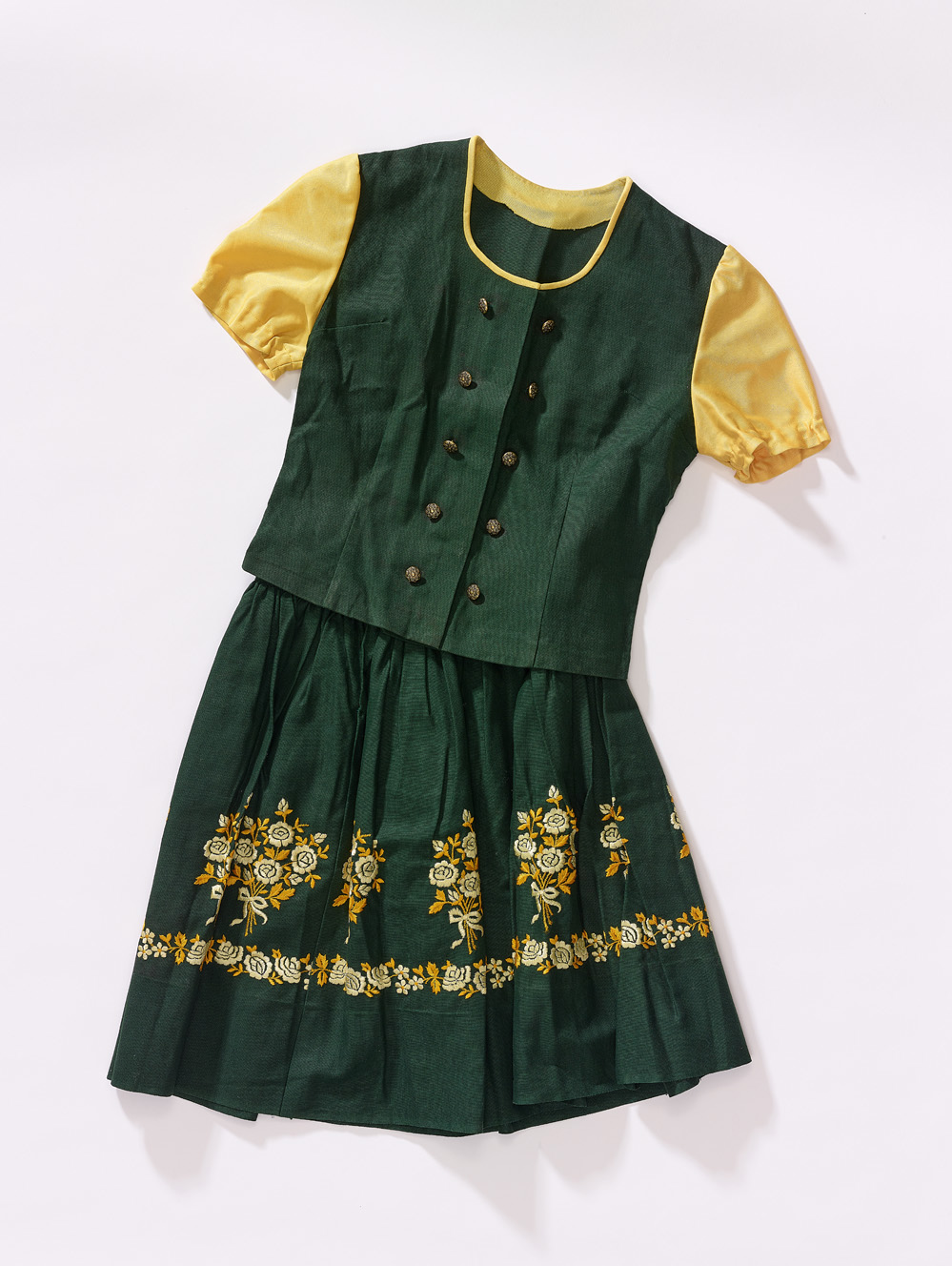
“As it happens, I was able to hunt down another photo. In it, my grandmother Elke is wearing the red dirndl, and my mother and aunt are wearing the green dirndls, also made by my great-grandmother Gertrud—but they were sewn, not knitted. Miniskirts were very much in fashion at the time, which is which the hem ends above the knee. The photo was taken in Addis Ababa. At the time, they were living in a settlement called Bole Homes. This was in December 1975.”
Email from grandmother Elke Yilma sent March 5, 2023
“Dear Ms. Belting,
My heartfelt thanks for your message. I was delighted to learn that my mother’s beautiful dirndl has found a well-deserved home in your museum.
Unfortunately, only one of the little dresses worn by the children has been preserved. I’m unsure whether there are more or better photos from the era, especially given the fact that people often made slides at the time. But I’ll do my best to hunt through the old albums.
I wish you much joy with your wonderful and unusual work. Once again sending thanks and warm wishes from the Ethiopian highlands.”
Email from grandmother Elke Yilma sent March 26, 2024
“Dear Ms. Belting,
I’m still at my sister’s in Düsseldorf. Then next Sunday I’ll return to my daughter in Frankfurt. I’ve brought along the child’s dress we still have. Marisa will take care of sending it on to Munich. With warm Oktoberfest wishes, your Elke Yilma.”
Email from Marisa Wolf sent April 12, 2024
“Dear Ms. Belting,
My grandmother is flying back to Ethiopia tomorrow. I’ll travel to Frankfurt at some point over the coming weeks and pick up the child’s dirndl before passing it on to you.”
A Dirndl in Addis Ababa: Traditional Attire and a Feeling of Home in Ethiopia
by Marisa Wolf
In the photo I have of my grandmother Elke, she’s wearing a dirndl—not in a Bavarian village, but in the middle of Addis Ababa. I’m particularly intrigued by this image because no-one back then could have guessed that one day I would move to Munich for university and wear a dirndl of my own. Thus everything unexpectedly came full circle. Yet neither my mother nor others in my family have any connection to Bavaria and its traditional attire.
So how did the dirndl end up in Ethiopia?
After the war, my grandmother Elke grew up in Düsseldorf. When she was in her early twenties, she met my grandfather, Zeleke. He came to Germany from Ethiopia for his studies, funded by a scholarship. But his residence permit was declared void after the scholarship was over. In fact, not even his marriage changed this. So in October 1965, my grandmother moved to Addis Ababa with him and their two young daughters. Back then, my mother was just nine months old. My grandfather was an engineer employed by Hilton Hotel, which meant he and my grandmother were naturally invited to join the parties held there. The Hilton was where larger events took place, attended by diplomats from many countries. Oktoberfest was celebrated there just as regularly as people visited church on a Sunday—of course I mean the German church. This was also the context in which a dirndl became a part of my grandmother’s wardrobe. It was an expression of belonging at these events. My grandmother Elke finds it important to emphasize that culture and dance were the key features of these gatherings—alcohol only served to lift the spirits.
Even though my family is from Hessen and North Rhine-Westphalia, not Bavaria, my grandmother Elke loved dirndls. She recalls that this is probably because she once went to Austria on holiday as a child. For her, the dirndl embodies culture, song, and dance.Looking at their faces in the photo, my mother and aunt both seem to be in a good mood—my mother even looks a bit mischievous. But wearing traditional attire on a Sunday was not always the high point of the week. They still went ahead and wore their outfits. After all, they were a gift.


Maybe you’re asking yourself who actually knitted the dirndl?
It was my great-grandmother Gertrud Rexroth, born in Friedberg on December 7, 1908. She was one of the first women in Germany to study law. She sewed or knitted countless items of clothing and also made silhouettes. She was a very brave woman. Early on, she opposed the Nazi regime: she helped Jewish neighbors and students to hide in her cellar during World War II.
Königsallee in Düsseldorf was one of my great-grandmother Rexroth’s favorite places. She took inspiration from the elegant window displays she passed while shopping, studying the garments’ cut, colors, and fabrics. If something caught her eye, or her granddaughters said, “Oh granny, I like that, I want that,” then she’d take the idea home with her and make it herself. She created her own patterns from memory using tracing paper, with a confident eye and a great deal of flair. Each item was unique, expressing her creativity, precision, and aesthetic sense. “All the outfits and clothes she made were her own invention—she never bought patterns.” (Quote from the granddaughters)
Now, back to the dirndl my great-grandmother thought up herself. My grandmother Elke was in Addis Ababa while her mother, my great-grandmother Gertrud was living in Düsseldorf. It was impossible to take measurements at such a distance. After a day’s work as a lawyer, she sat down with her knitting needles and sewing machine to make dirndls for her daughter and granddaughters. “Everything fit like a glove.” (Quote from the granddaughters)
This was the series of events that led to my grandmother Elke receiving her dirndl on Christmas Eve in 1968. The photo shows how confidently she paired it with white Nancy Sinatra boots. Interestingly, the garment was originally a mini dirndl and only later let out to make a midi dirndl. After all, miniskirts were in fashion back then.
My aunt, my mother, and my grandmother attracted plenty of interest back then when they would go to church in Ethiopia, each wearing a dirndl. The German community of aid workers in particular often asked “Who made that?” Then my grandmother Elke would proudly tell the tale of her mother Gertrud’s unique creations from Düsseldorf. Her skill and creativity as a seamstress attracted a great deal of admiration. It’s a piece of German folk culture worn in Ethiopia.
Marisa Wolf is a coach and offers innovation coaching under the name Moka Panda Innovation. After studying global economics and communication in Munich, she worked as a project manager. Her work is focused on human-centered design and creativity. She sees storytelling as a means of creating a bridge between people, change, and points of view.
Dr. Isabella Belting is a historian and head of the Fashion and Textile Collection at Münchner Stadtmuseum. She has curated many exhibitions on cultural history and fashion history.
Keywords
Categories
Plan Your Visit
Opening hours
Interim exhibition What the City. Perspectives of Munich in the former armory
Tuesday – Sunday 11am – 7pm
Free Admission
Filmmuseum München – Screenings
Tuesday / Wednesday 6.30 pm and 9 pm
Thursday 7 pm
Friday / Saturday 6 pm and 9 pm
Sunday 5 pm
The rest of the museum is currently closed due to the general refurbishment.
Contact
St.-Jakobs-Platz 1
80331 München
Phone +49-(0)89-233-722370
E-Mail stadtmuseum(at)muenchen.de
E-Mail filmmuseum(at)muenchen.de
Cinema ticket reservation Phone +49-(0)89-233-724150