

Porcelain Glove Puppets? Fritz Klee and Puppet Theaters
Glove puppets are known for being punchy—quick-witted, but also quite literally ready to land a blow. Unsurprisingly, then, it’s unusual for glove puppets to be made out of porcelain. This makes the porcelain glove puppets and glove puppet heads held by the Puppet Theater & Fairground Attraction Collection in Münchner Stadtmuseum all the more unique. They are the work of artist Fritz Klee (1876–1976), who headed the Bavarian state vocational school for the porcelain industry in Selb, Germany. A number of these figures are on display at the exhibition "Fritz-Klee - Ein Selber wider Willen?" (Fritz Klee—An Accidental Selber?) at the Porzellanikon in Selb.
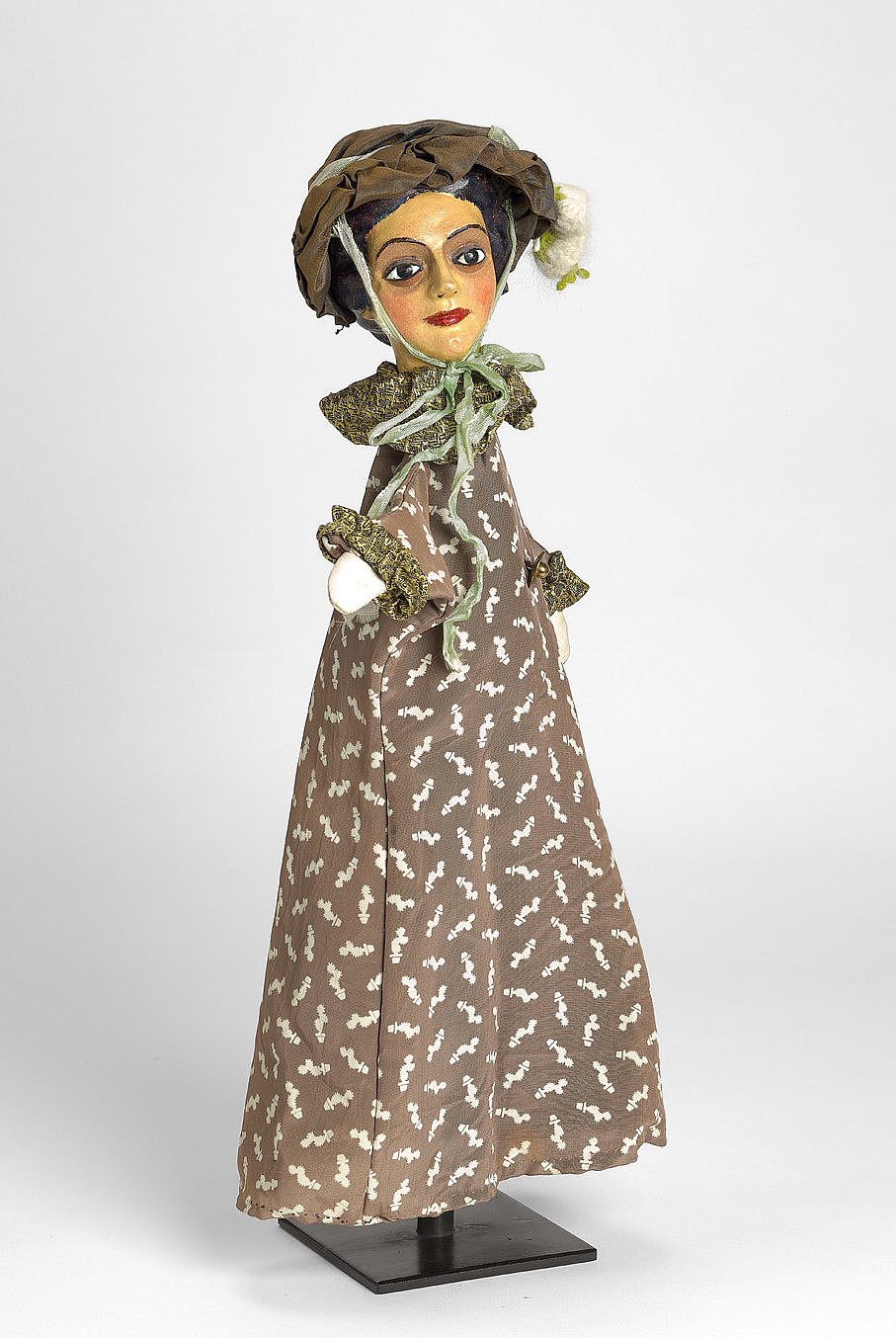
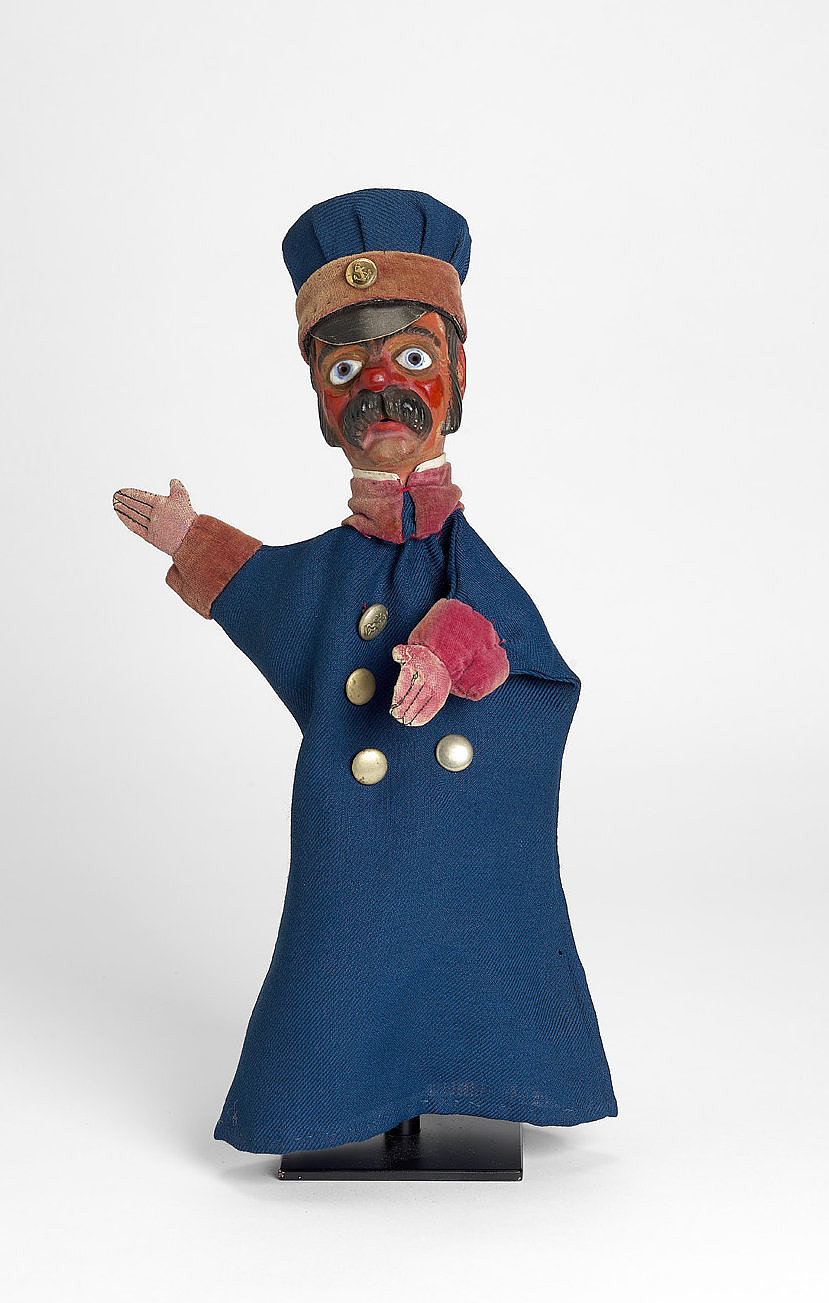
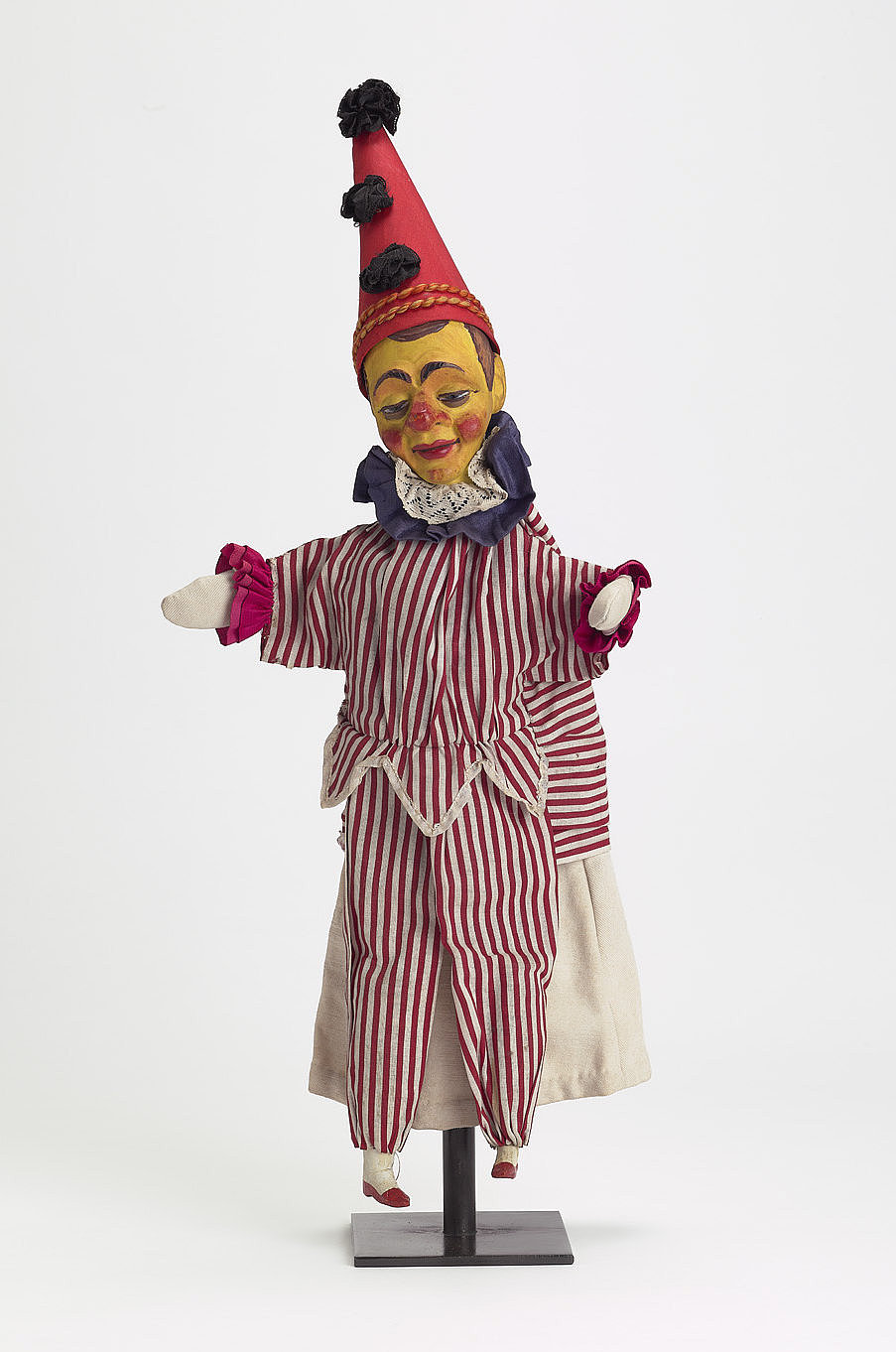
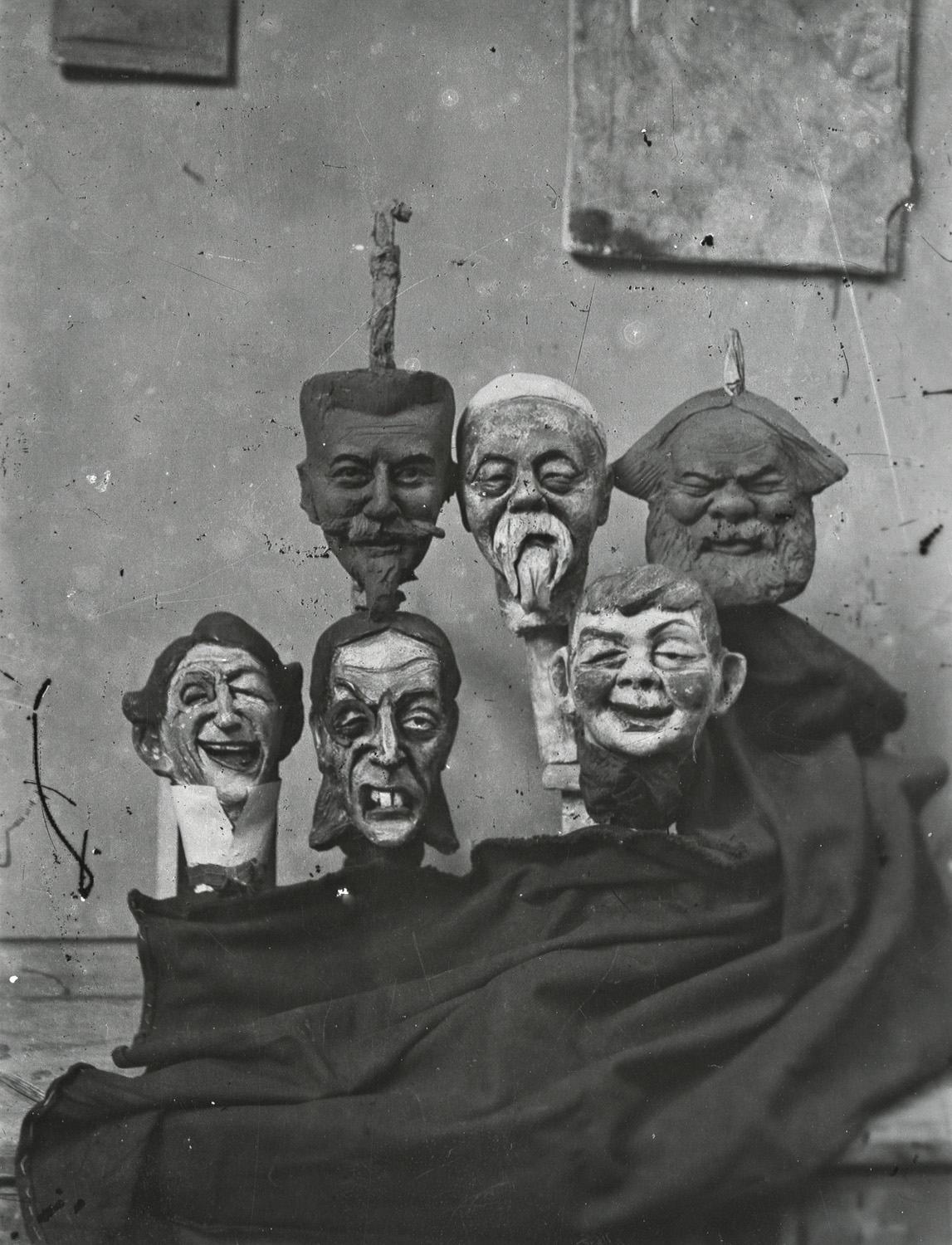
As is so often the case, queries from curators in the town of Selb have spurred us to consider the figures in our collection more carefully. And as (almost) always, questions remained open even after we concluded our research. Though Fritz Klee mentioned a report outlining his work as a puppeteer in his letters to the collection (1950s), this was unfortunately never sent. Therefore, little is known about the performances held at the puppet theater in Selb’s Casino Verein between 1910 and 1934, usually during carnival. We neither know the titles of the plays nor the names of those involved. What we do know is that the performances were aimed at children. Whether there were also puppet shows intended for adults, as in Ludwig Thoma’s one-act play “Erster Klasse” (First Class), is not known. Sculptor Karl Himmelstoss (1878–1967) and his wife Hulda Krebs-Himmelstoss (1879–1967) were the most important individuals working at the puppet theater. Both also worked for the Rosenthal porcelain painting firm in Selb from 1920 onward. What remains are 51 glove puppets, 41 glove puppet heads, and 17 backdrops, all of which Klee donated to the Puppet Theater & Fairground Attraction Collection at Münchner Stadtmuseum in 1952. There are no remaining playscripts, meaning figures must be identified by their appearance, and not by the name of the character they represent.
Lifting the curtain once again on these figures as well as the performances in Selb they starred in, it is useful to look more broadly at puppetry of the time. Turning in particular to Munich, one can better understand some possible influences on Fritz Klee’s puppet theater and more clearly imagine the actual performances.
Munich circa 1900
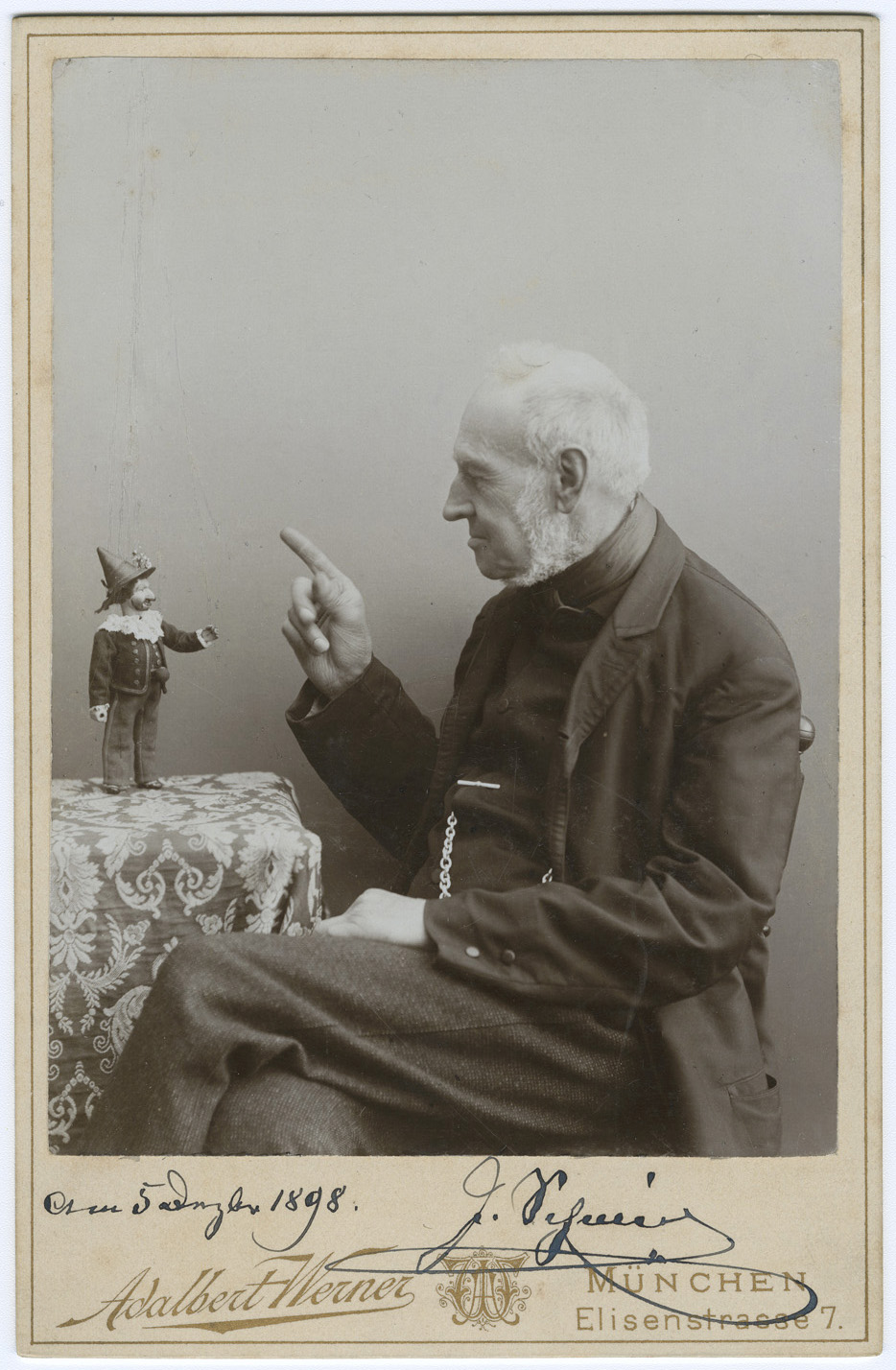
Fritz Klee studied architecture at the Technische Hochschule in Munich before working in the city until 1909. He was certainly familiar with Munich’s rich cultural life and puppetry circles, working as he did for theaters and puppet theaters (see below).
There is a long history of puppet theater in Munich (as there is across all of Europe) that can be traced back to the Middle Ages (and indeed further back in Asia and Africa). Glove puppet operators with their small theaters first appeared at markets and folk festivals, and later discovered Oktoberfest as a new place to perform. Moreover, marionettes and shadow puppets would travel across Bavaria. The best-known example is Munich’s Marionettentheater, founded by Josef Leonhard Schmid (1822–1912) in 1858. Franz Graf Pocci (1807–1876) served as the theater’s house author in its early years. By 1900, “Papa Schmid”, as he was nicknamed, had become a fixture in Munich. The city even erected a theater for him on Blumenstraße. Theodor Fischer (1862–1938), then working at Munich’s department of public works, was responsible for its architectural plans. Fischer became a professor at the Technische Hochschule in Stuttgart in 1901 and a professor at the Technische Universität in Munich in 1908. It is quite possible that he and Klee knew one another, as Klee himself worked for Munich’s department of public works from 1904 onward. Klee most likely visited Munich’s Marionettentheater and it probably served as an inspiration for his own involvement in theater.
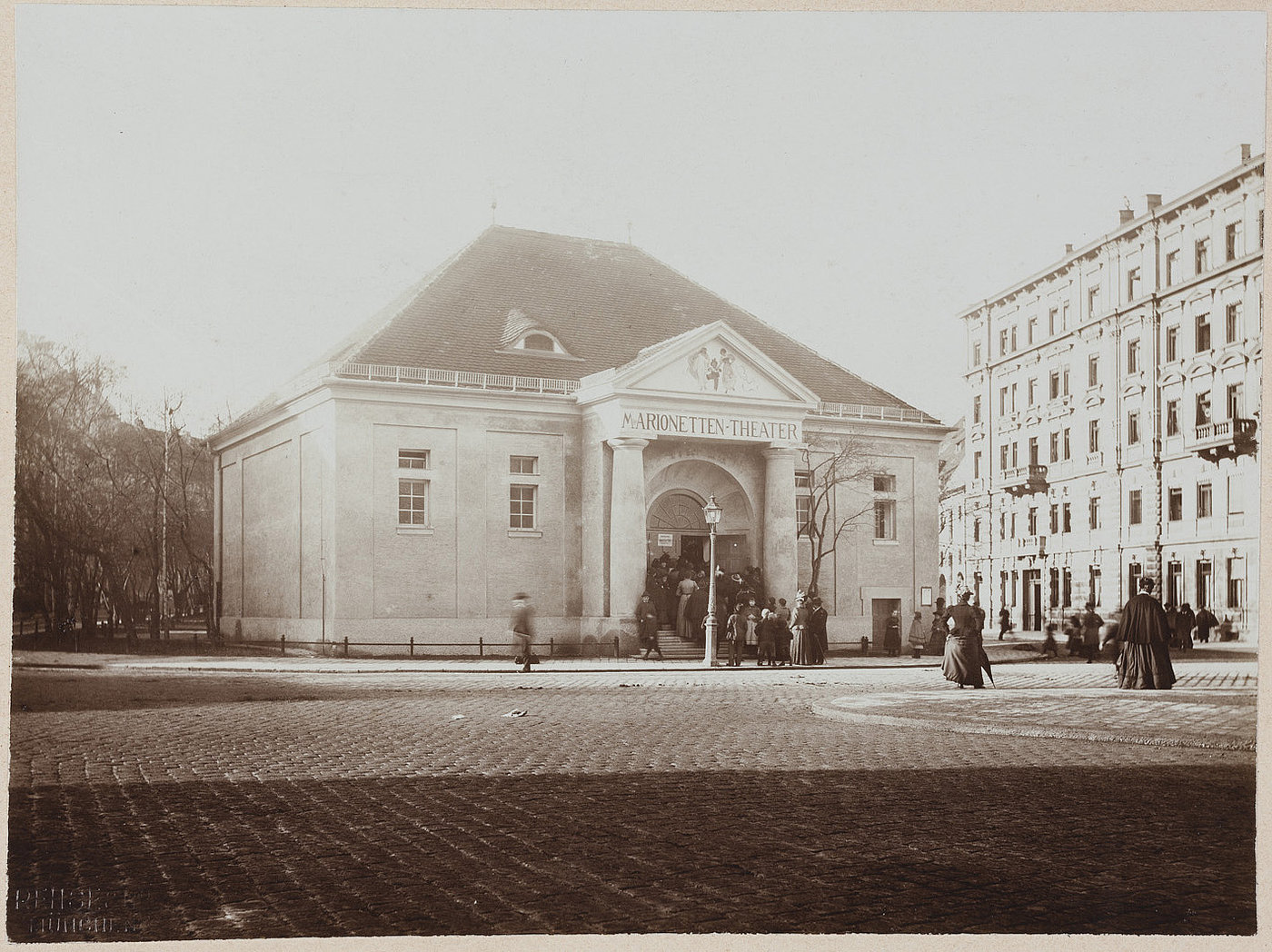
Munich was a magnet for young artists in the late 1800s and early 1900s. The city was regarded as an internationally renowned city of art with many galleries, museums, and an art academy—as well as private schools, including ones for women (who were only admitted to the academy from 1920). Munich was also a city for modern theater. Works by Norwegian playwright Henrik Ibsen (who lived in Munich on and off between 1875 and 1891) were performed early on, and one could attend closed performances of works by naturalist authors including Gerhart Hauptmann and Hermann Sudermann at the Akademisch-dramatische Verein. The theater on Maximilianstraße was built in 1901 and later became home to the Münchner Kammerspiele, while the Münchner Künstlertheater was erected in 1908, putting into practice Georg Fuchs’s avant-garde vision for a frieze stage. With these venues, the citizens of Munich established two artistically and architecturally demanding performance spaces.
Similarly, the cabaret Die Elf Scharfrichter was created as a protest against the “Lex Heinze”, a German law passed in 1900 that called for increased censorship of theaters in the name of “decency”. This cabaret, like Schall und Rauch in Berlin, was part of a larger movement whereby small theaters were established across Europe in the tradition of Parisian cabarets like Chat noir. One of the first pieces shown as part of this avant-garde project was “Die Feine Familie” by Willy Rath in 1901. This political satire was a puppet theater piece that used rod marionettes that had heads created by sculptor Waldemar Hecker.
Hecker distanced himself from Die Elf Scharfrichter in 1901, following the first season. He began performing with his marionettes not only at cabarets in Munich and in Berlin from 1904. His works included parodies of plays such as Maxim Gorky’s drama about unhoused persons, “The Lower Depths” as well as a children’s program which included works by Pocci. As a young man interested in art, it is likely Klee would have been familiar with Die Elf Scharfrichter.
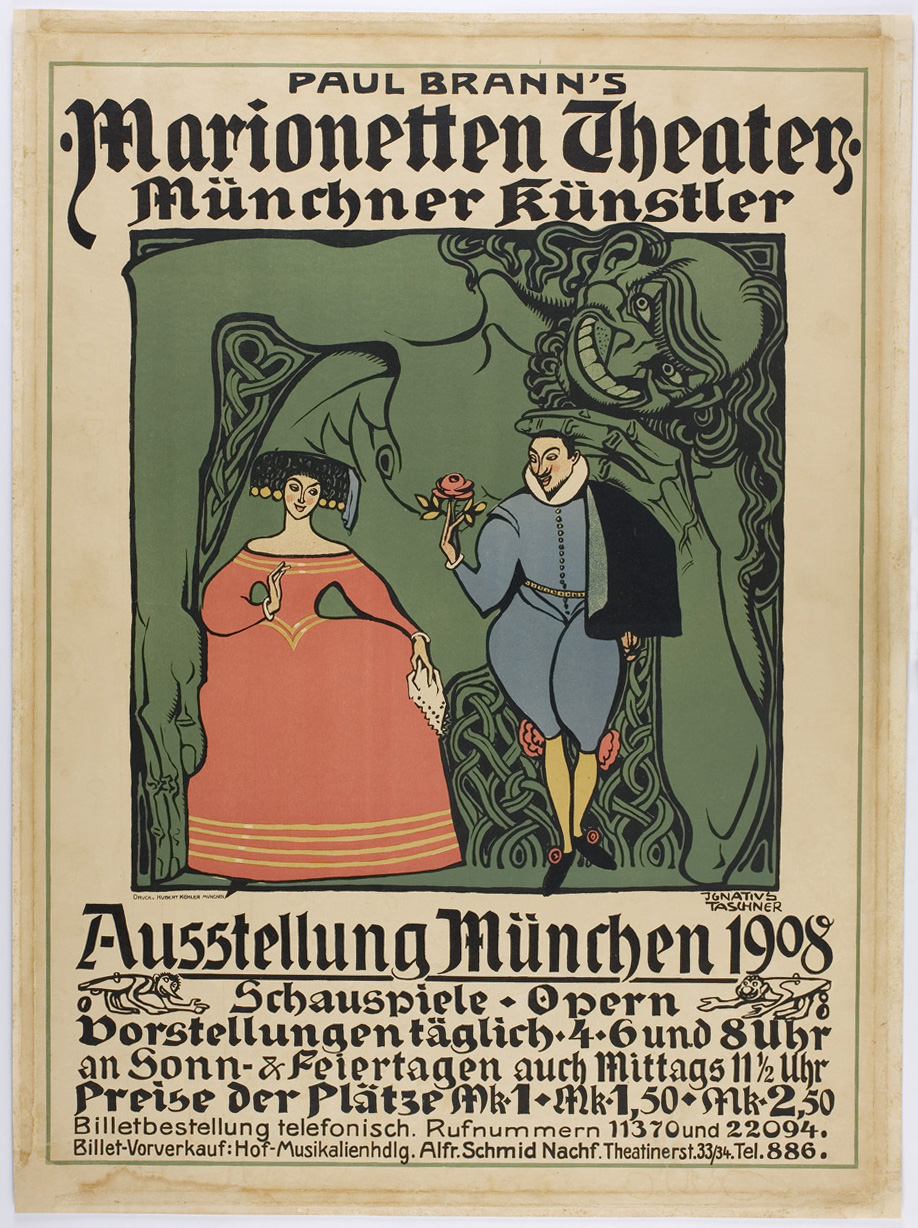
It is very likely that Fritz Klee knew the Marionettentheater Münchner Künstler, founded by author and director Paul Brann (1873–1955) in 1906. Brann aimed to stage contemporary plays, including works by Maurice Maeterlinck and Arthur Schnitzler; small-scale operas; and classics such as “Faust”. Here, he made use of the traditional versions handed down by wandering puppeteers, deploying figures and sets designed by artists, and implementing the latest stage technology. Brann worked with artists including sculptor, furniture designer, and illustrator Ignatius Taschner; Josef Wackerle, head of Nymphenburg porcelain manufacturer; “Simplicissimus” draughtsman Olaf Gulbransson; and the applied artists Adalbert Niemeyer, Bernhard Pankok, and Julius Diez. This ambitious theater intended for adults was a huge success across German cities and in European capitals such as Vienna and Paris. Klee is likely to have visited Brann’s theater, which was situated beside the Schwabinger Schattenspiele during the Munich Fair of 1908. Klee was the architect responsible for the Schwabinger Schattenspiele.
Fritz Klee’s Involvement in Munich Theater
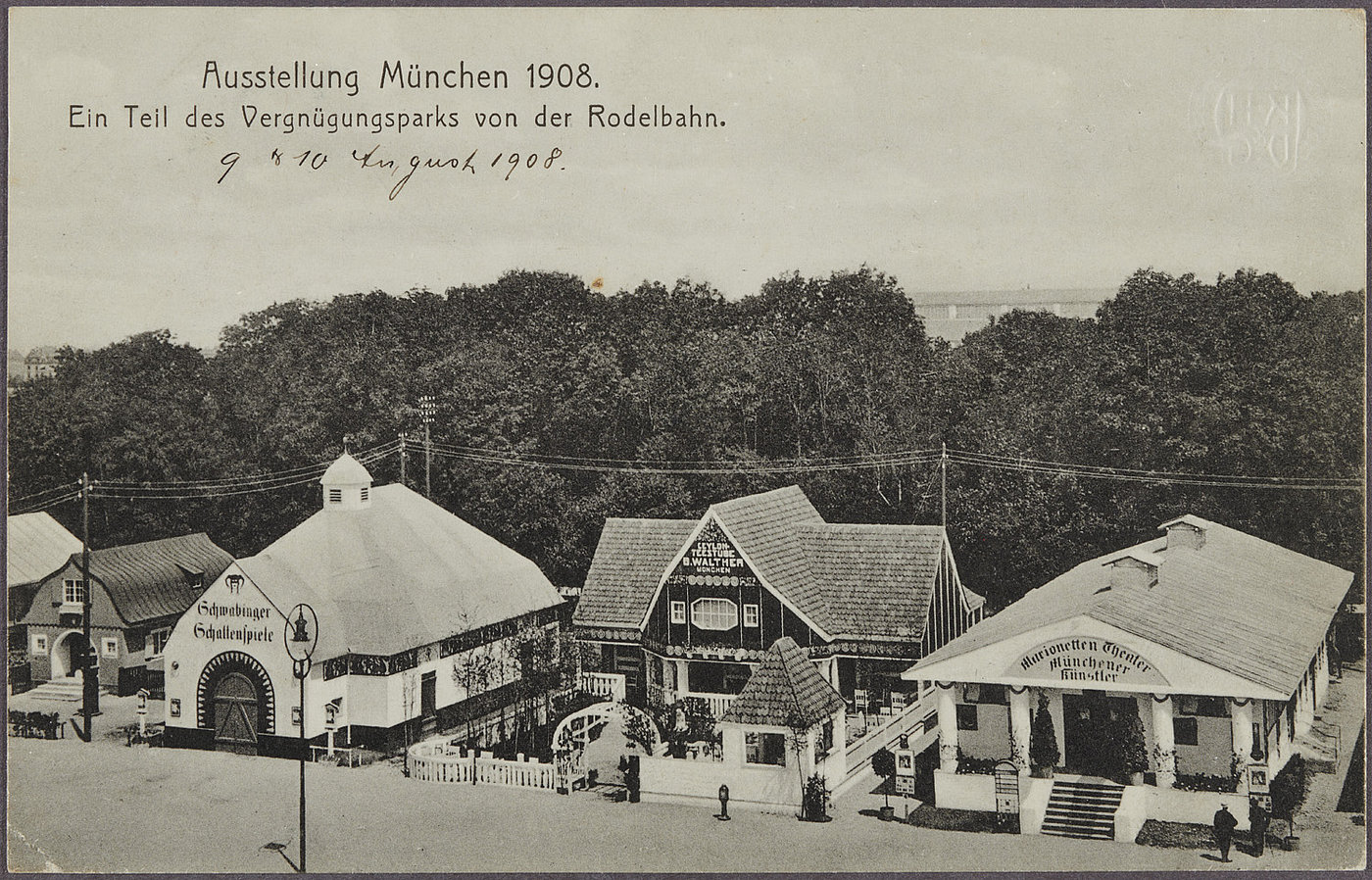
The Schwabinger Schattenspiele, founded by author Alexander von Bernus (1880–1965) in 1907, is likely to also have been influenced by cabaret. Georges Fragerolle’s shadow play, “Le Sphinx”, was performed at Die Elf Scharfrichter following a German translation by Willy Rath. The piece traveled from Chat noir in Paris, a well-known cabaret in Montmartre famed for its shadow plays incorporating color. However, von Bernus and his fellow performers took a more lyrical theatrical approach, invoking a neo-Romantic spirit. Further works performed include pieces by Romantic authors such as Justinus Kerner and Ludwig Tieck as well as by contemporary authors including Karl Wolfskehl and von Bernus himself. However, the Schwabinger Schattenspiele also put on Pocci’s classic Kasper plays, appealing to the broad audience at the exhibition grounds of the Munich Fair, held between May 1 and October 15, 1908. This was performed in an understated building designed by Klee, with a high-hipped roof and a shadow frieze created by Rolf von Hoerschelmann. Generally speaking, shadow plays were something of a niche art form known mainly to insiders, but here they reached an unexpectedly large audience with 434 performances over just 116 days. The program included lyrical and poetic works as well as comedies. Figures for the latter were made with exaggerated, caricaturesque features cut by Rolf von Hoerschelmann, Dora Polster, and others.
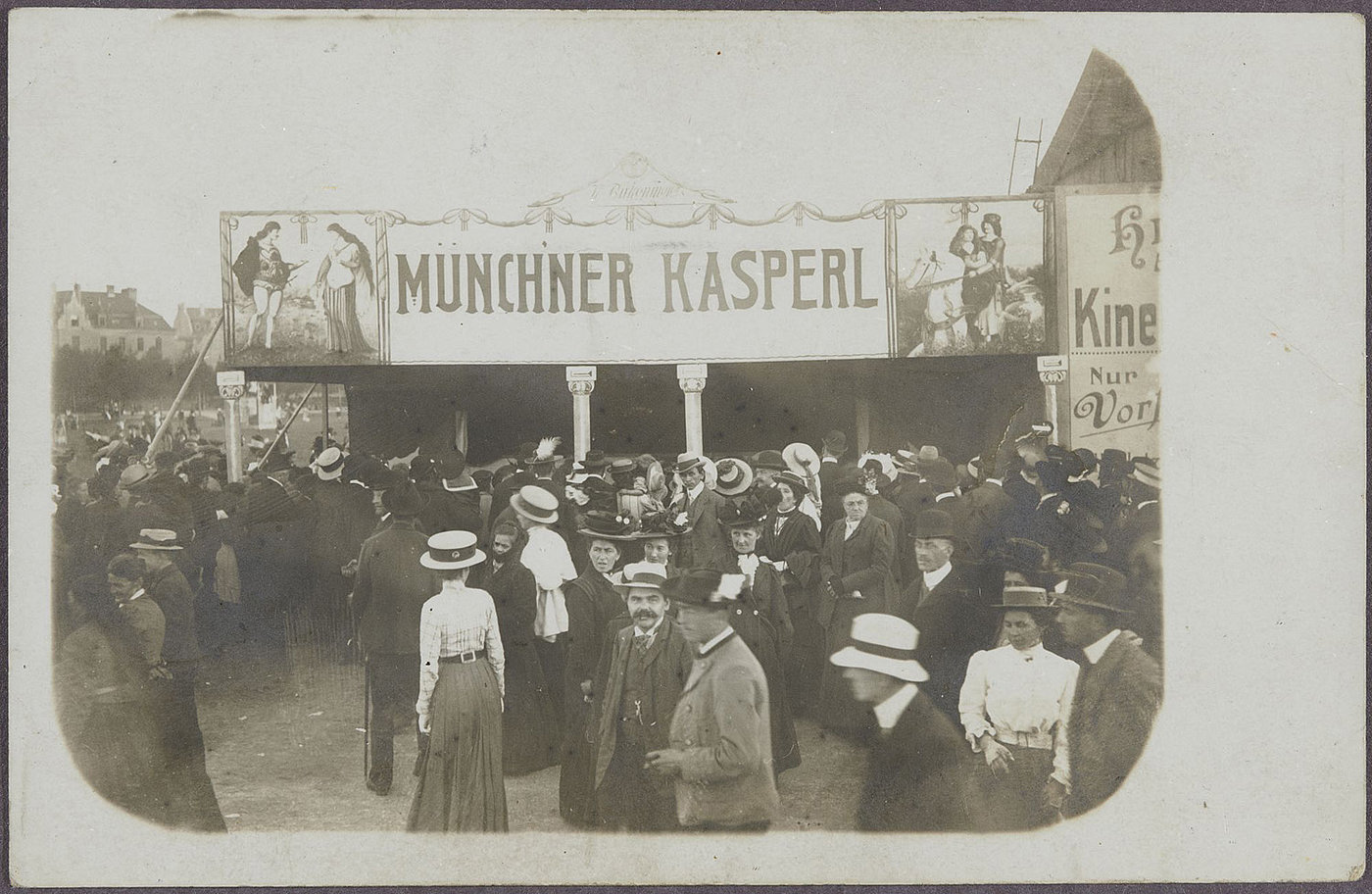
Klee also designed a second theater building for the exhibition grounds. This was a puppet theater for the more traditional performer Karl Birkenmeier (1883–1957). Birkenmeier was an old-school puppet master who also performed at folk festivals and Oktoberfest. To the delight of his audiences, he mounted traditional pieces with a highly lively Kasperl figure, known to dispatch his opponents with a vigorous slap: “And oh, the beatings!” a newspaper article reports. “This is always the most amusing part of such puppet shows, and the audience is lavish in their encouraging shouts and applause!” Another, undated article reads: “Images upon images appear on the small stage, and perhaps their power derives from the fact that they are never hidden behind a curtain. The play keeps progressing, indefatigably: people appear and disappear, beat someone to death and are in turn beaten to death, but onward and onward the play keeps going without interruption, just like life itself. Only one thing is always present and unchanging, even if the images change a thousand times: the woman with the collection plate.”
We can be certain Klee attended performances at this puppet theater. His own Kasperl figure shows some similarities to a figure in the Karl Birkenmeier collection within the Puppet Theater & Fairground Attraction Collection. Both of them wear high hats with three pompoms, similar to a jester or clown.
As well as the puppet theaters themselves, Klee also designed postcards with grotesquely exaggerated figures for the Münchener Versuchsbühne Thespis (likely a stage for actors). Parodies and caricatures came naturally to him. He created two postcards to accompany Maxim Gorky’s “The Lower Depths” in 1905. We do not know of the performance was a sincere interpretation or a parody. But this proves the fact that Klee was involved in Munich’s theater and puppet theater scene.
Puppet Theaters in Family Circles and the Movement to Reform Life
The “Lebenssreforbewegung” (a social movement to reform life) was doubtless among the influences relevant to the puppetry of Fritz Klee and his associates Karl Himmelstoss and Hulda Krebs-Himmelstoss. At the turn of the century, puppet theaters were a beloved fixture of bourgeois families. Paper-based theater productions could draw on a vast array of printed sheets created for use as backdrops, props, figures, and the theater itself—all released by a number of publishers alongside accompanying playscripts, which were often abridged versions of a standard opera and theater repertoire. Moreover, there were extensive supplies on offer for glove puppet theaters situated in household doorways as well as marionette theaters for the home. Depending on the theater aficionado’s ambitions, these home theaters sometimes comprised elaborately designed sets with genuine artistic ambitions. Other emerging artists set up home theaters in order to try out their ideas in front of friends and colleagues. It is no coincidence that Hilmar Binter—who went on to establish his own theater in Munich and to head up the Münchner Marionettentheater from 1933—took his first steps as an artist in his father’s home theater.

The Sollner Puppenspiele was a similar theater with artistic ambitions, this one a marionette theater run by sisters Marie, Magda, and Sofia Janssen that was founded in 1914. This theater, based in the family villa, blazed its own path and attracted a sophisticated audience with original, neo-Romantic plays, newly composed music, and marionettes made by Marie Janssen. She is a figure of interest with regard to Klee’s theater as she—a ceramicist—created the heads of her figures of terra cotta, an unusual and fragile material rarely used for such figures.
The life reform movement regarded puppet theaters as a form of art to be encouraged both in schools and among families. The movement aimed to work in opposition both to “filth and rubbish”, to use the parlance of the time, as embodied in movies, which were increasing in popularity, and to the mass culture of industrialized metropolises.
As early as 1911, artist Carlo Böcklin (1870–1934), son of the painter Arnold Böcklin, created a set of glove puppets intended for use by families, as advertised in the magazine “Der Kunstwart”. Verlag Gebauer und Schwetschke in Halle/Saale began selling it in 1911. Moreover, Böcklin worked together with author Beate Bonus-Jeep (1864–1954) to write four illustrated Kasperl books which established a new dramaturgy for Kasperl plays, showing that a plot could be carried across space and time instead of merely presenting a series of separate short scenes. By introducing the figure of the grandmother, Kasperl plays were made more suitable for young people. The grandmother’s child-friendly personality stood in contrast to the original and anarchic Kasperl familiar from fairgrounds, who was focused chiefly on his own well-being and survival. On Böcklin followed applied artists and puppet masters Else Hecht (1888–1975) and Marion Kaulitz (1865–1948), both of whom had begun performing for children during World War I using cloth puppets and thus were very early representatives of the new art of glove puppetry in Munich. The repertoire of plays recommended for this milieu was initially limited, mainly comprising Pocci’s Kasperl plays, but it quickly expanded to include new Kasperl comedies and fairy tales written by senior teacher Dr. Otto Max Paul from Dresden, school administrator Dr. Hugo Schmidt from Hainichen, Saxony, and others. These works, too, followed a clear-cut opposition between good and evil. Their narratives were centered on Kasperl, who solved the problems befalling his everyday life and set off on adventures. By the end of the performance, all problems would be solved and Kasperl would have returned home.
It is likely that Klee came into contact with this more artistic approach to glove puppetry through his fellow puppet masters and figure designers, Karl Himmelstoss and Hulda Krebs-Himmelstoss, both of whom lived in Munich until 1920. Krebs-Himmelstoss worked in the toy industry herself during World War I as well as creating artist model sheets for figures made from cardstock (Fuchs’s artist model sheets used to make flexible card figures following drafts by Krebs, based in Munich).
Before looking more closely at the extant puppets and backdrops from Selb, it is worth taking a brief detour to a man who shares Fritz Klee’s surname: Paul Klee created his puppet theater for and with his son Felix and friends at the Bauhaus in Weimar. Klee began making his unusual glove puppets while still in Munich using household materials, found items, and plaster. Though they were not specified as artworks, they are among the most expressive glove puppets of the period. Of the original fifty figures, the Zentrum Paul Klee in Bern holds thirty today. No backdrops painted by Paul Klee have been preserved. The artist’s puppets included the traditional Kasperl cast: Kasperl himself, death, and the devil, all familiar from the fairground puppet theaters of Munich, which Felix Klee loved. The glove puppets also depicted colleagues and acquaintances from the Bauhaus as well as Paul Klee himself. As with Fritz Klee’s work, not much is known about Paul Klee’s plays and their storylines. Events and people from everyday life at the Bauhaus were doubtless made the butt of some jokes. A comparison is highly interesting given the shared context of the applied arts schools to which both Fritz Klee and Paul Klee were a part.
The Casino Puppet Theater at Selb
As has now become clear, Fritz Klee’s puppet theater in Selb can be understood within a larger temporal setting. To finish, here are a number of thoughts as to how performances were organized.
The size of the backdrops suggests that the stage itself was about 90 x 60 cm, i.e. a size typical for a doorway theater rather than a theater installed in a larger hall. It is likely that a maximum of two puppeteers (and thus a maximum of four glove puppets) performed at a time, animating all the puppets and speaking all the roles.
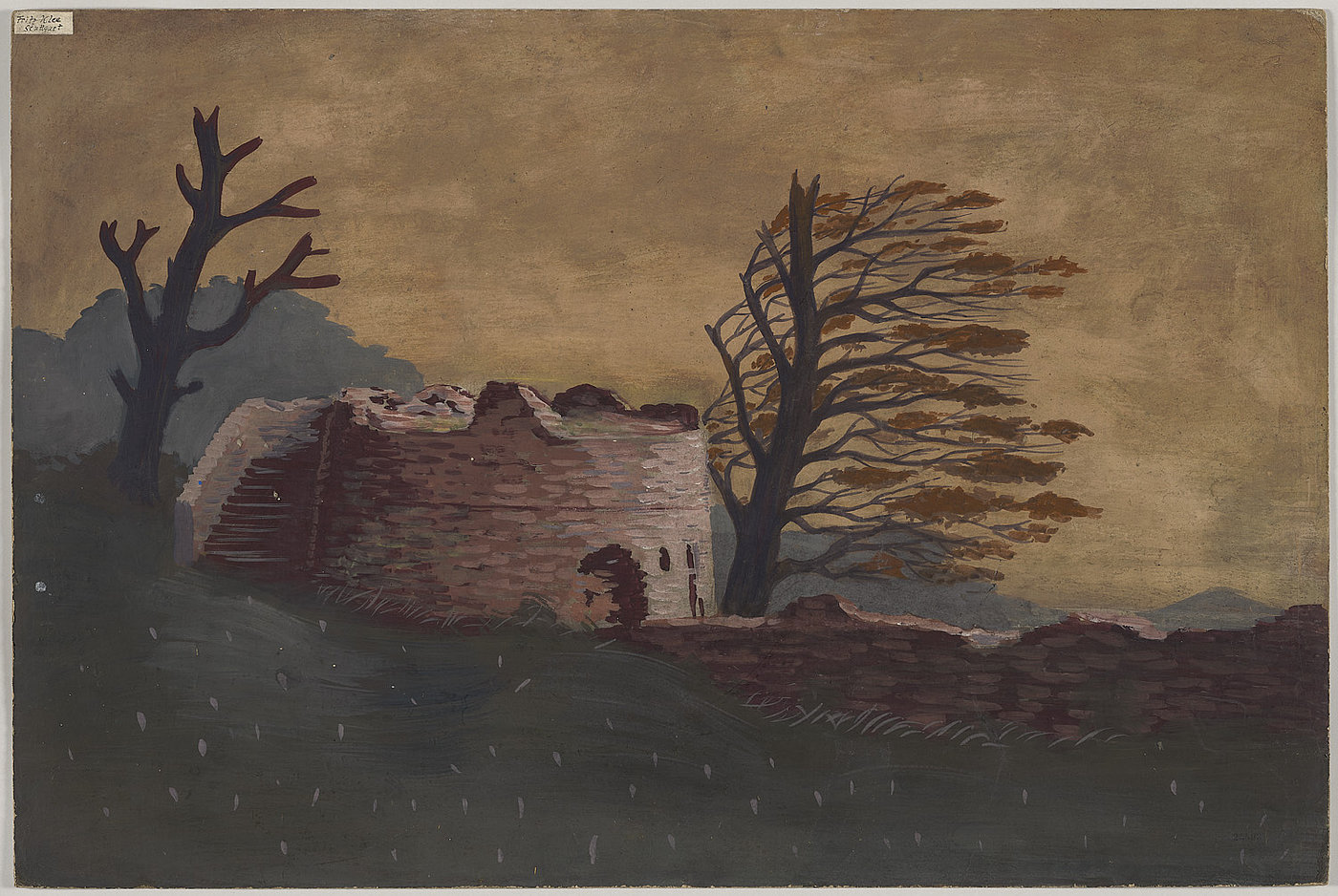
The material from which the puppets’ heads were made—porcelain—offers the most important clue. As this is a relatively fragile material, it is highly unlikely that Kasperl would have taken up his slapstick to ward off enemies as vigorously as did Birkenmeier’s wooden puppets (which we know appeared at Oktoberfest and on the exhibition grounds at the Theresienwiese). If he had, the figures would have swiftly shattered. A figure of a robber evokes the design of Böcklin’s bonus illustrated books, as does the puppet of a Black person and the design details of a devil. All the key figures are present: a witch, the figure of death, a guard, a ghost, a magician, and the aforementioned devil and robber. Thus, one might assume a repertoire along the lines of the previously described puppet fairy tale/comedies. This is also suggested by the vibrant and colorful backdrops, created with a near-Expressionistic use of deep reds, oranges, and yellows, which evoke the set designs for Marionettentheater Münchner Künstler by Ernst Stern (1876–1954) and Leo Pasetti (1882–1937), both of whom went on to work for major theaters in Munich. Sporting an idyllic small town, a farmhouse living room, a castle and castle ruins, a clearing, and a mountain lake (which perhaps evoked the countryside around Munich), they would lend themselves to Pocci’s dramatic works and other puppet comedies about Kasperl and his harmless adventures.
Some of the figures appear to be portraits, including the elegant gentleman with a goatee and some of the heads (especially those attributed to Karl Himmelstoss). Other figures seem more like bold caricatures of small-town society, including the “snooty women” and “simple men”. Is it possible they were used to act out short, humorous scenes about everyday life of people working in porcelain manufactures for an adult audience, or perhaps for people associated with the applied arts school for porcelain—not unlike Paul Klee and the Bauhaus?
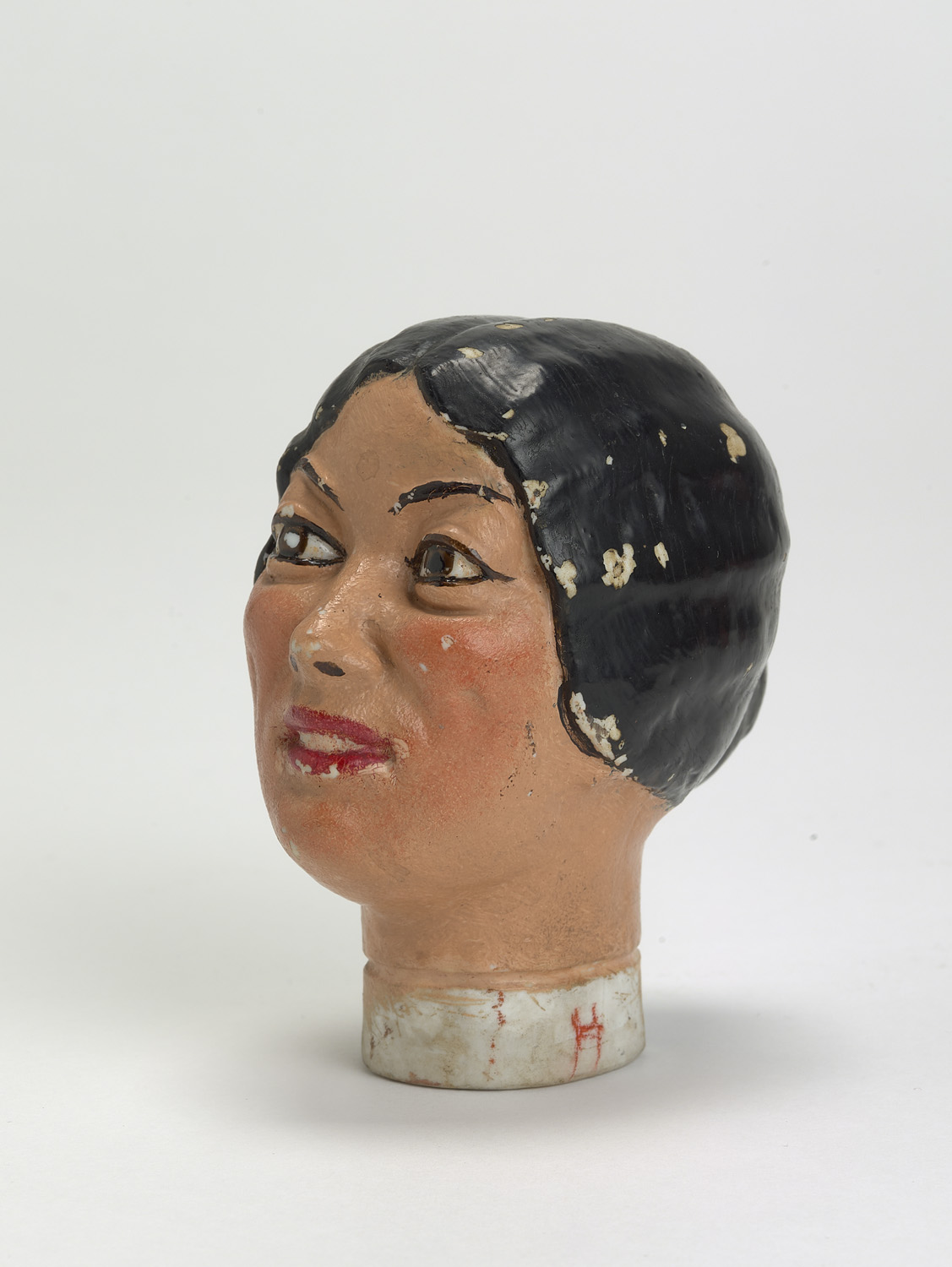
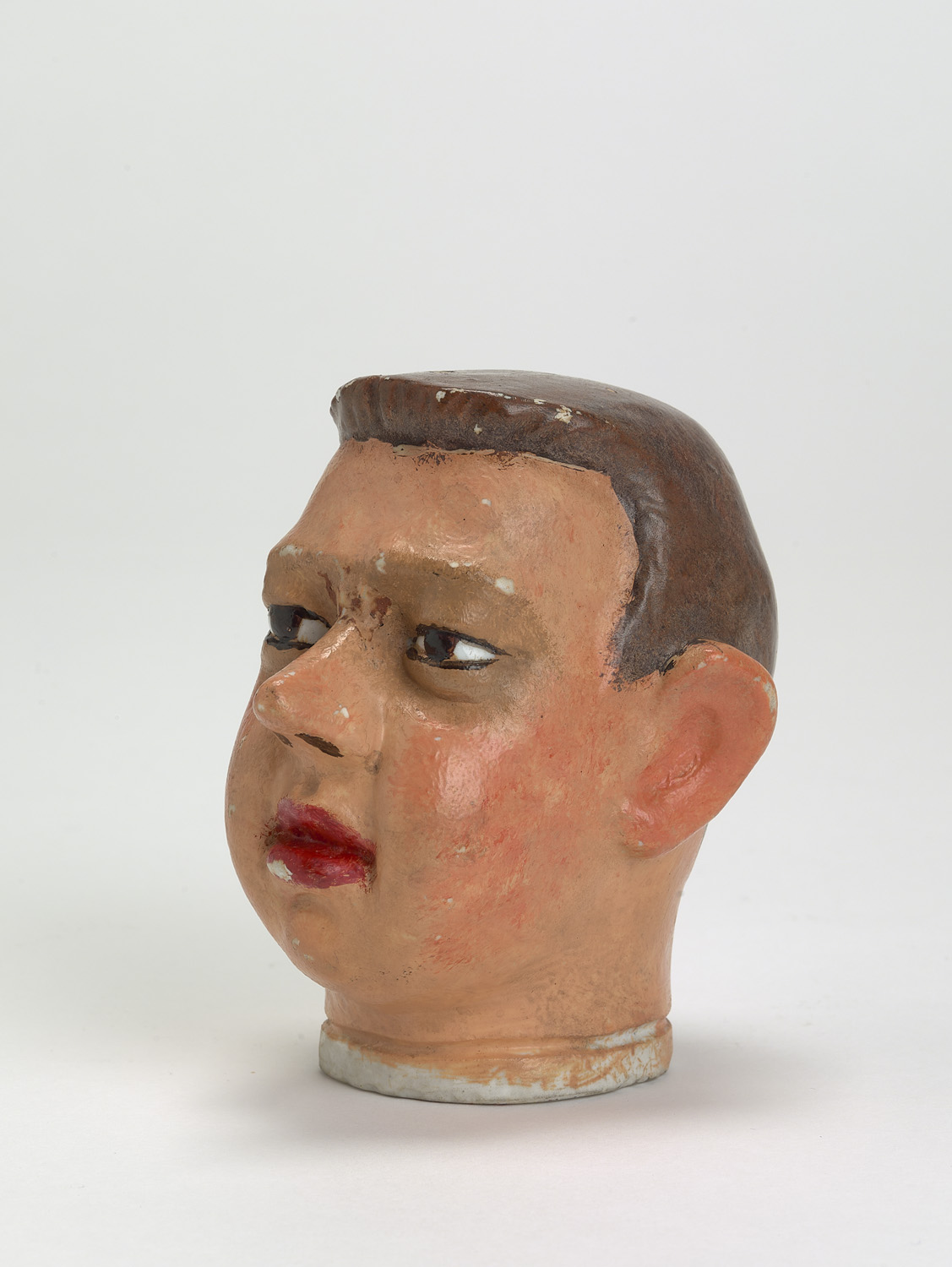
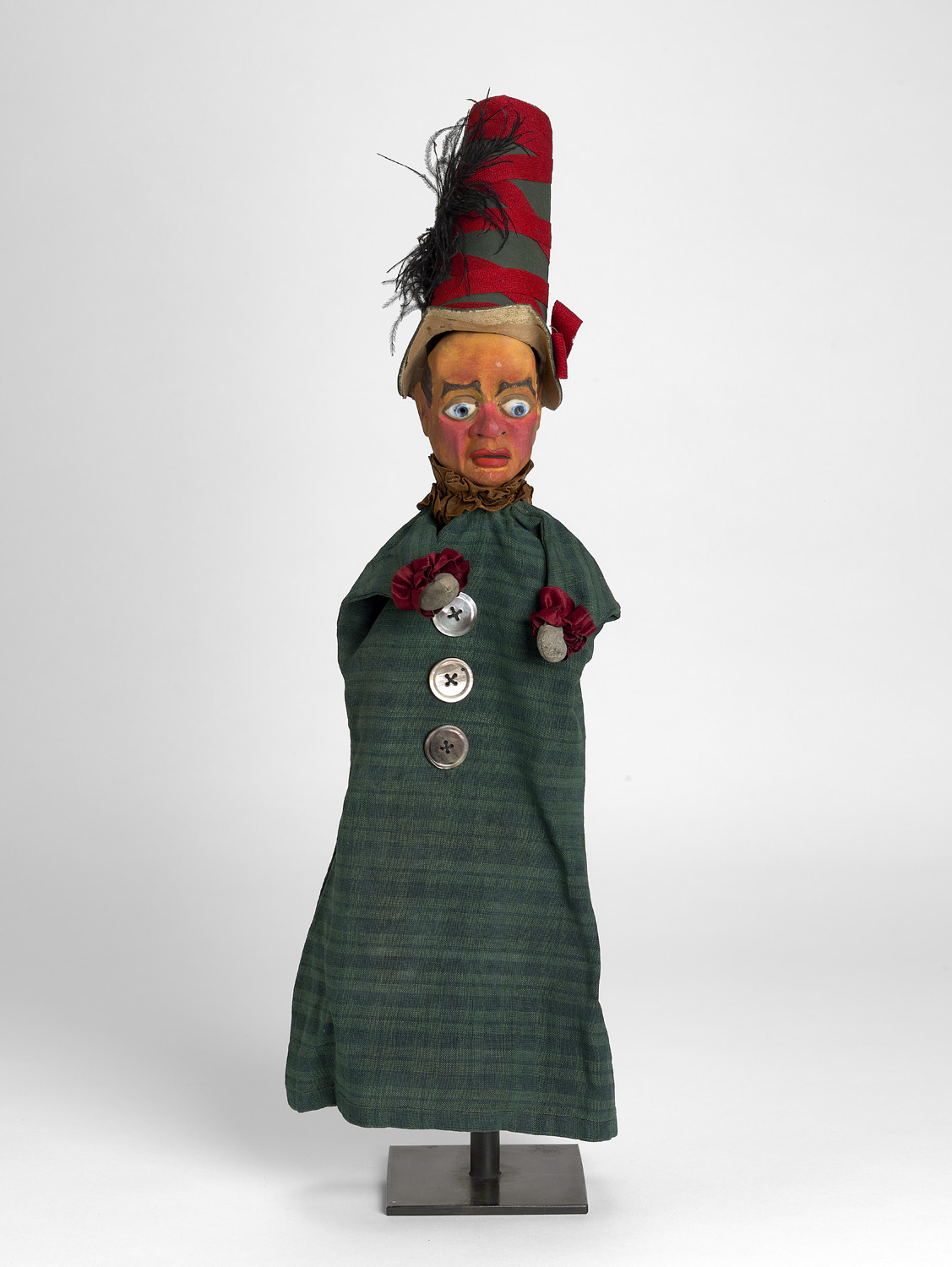
Other figures and heads appear less distinctive. Perhaps these were made by students?
It is clear that the figures were generally intended to be striking and outlandish with their bulging eyes and bold coloring, though the eyes and mouths of some were left unpainted. Their makers clearly wanted to—and did— draw on their talent for caricature. The meticulously designed costumes for the glove puppets made by Hulda Krebs-Himmelstoss served to enhance their expressive power.
Fritz Klee’s glove puppets are precious and unique examples of a culture of puppetry that experienced its heyday in the 1920s, with highly artistic stages in private homes as well as over eighty newly established professional theaters. Moreover, the puppets are witnesses to a lively cultural life enhanced by Selb’s school of applied arts and its staff and students. Those interested can learn more about Fritz Klee in the exhibition.
Sources:
- Mascha Erbelding: Eine kleine Revolution des Theaters. Figurentheater in München zu Beginn des 20. Jahrhunderts. In: Roger Diederen, Anja Huber, Nico Kirchberger, Antonia Voit (Hg.): Jugendstil Made in Munich. Katalog der gleichnamigen Ausstellung. München, 2024. (S. 168-175)
- Georg Fuchs: Die Revolution des Theaters. Ergebnisse aus dem Münchener Künstler-Theater, München und Leipzig 1909
- Petra Knaus: Das Schwabinger Schattenspiel-Theater auf der Theresienhöhe
- Schattenspiele im Vergnügungspark – einfach Vergnügen. https://municharttogo.zikg.eu/items/show/179
- Ludwig Krafft: München und das Puppenspiel. München, 1961
- Mitteldeutsches Marionettenmuseum (Hg.): Kaspers Welten – Kaspertheater als immaterielles Kulturerbe. Bad Liebenwerda, 2024
- Manfred Wegner: Künstlerisches Puppentheater. In: Norbert Hopster (Hg.): Kinder- und Jugendliteratur in der Zeit der Weimarer Republik. Teil 2. Frankfurt a.M., Berlin, Bern, Bruxelles, New York, Oxford, Wien: Peter Lang, (S. 791–832)
- Manfred Wegner (Hg.): Handbuch des Künstlerischen Puppenspiels 1900-1945. Deutschland, Österreich, Schweiz. München, 2019
- Zentrum Paul Klee (Hg.): Paul Klee. Handpuppen. Ostfildern, 2006
Mascha Erbelding studied dramaturgy, comparative literature, and history at Bayerische Theaterakademie August Everding and at Ludwig-Maximilians-Universität München. She commenced work as a research assistant at the Puppet Theater & Fairground Attraction Collection in Münchner Stadtmuseum in 2008, becoming head of the collection in February 2021. She has curated many festivals and exhibitions.
Keywords
Categories
Plan Your Visit
Opening hours
Interim exhibition What the City. Perspectives of Munich in the former armory
Tuesday – Sunday 11am – 7pm
Free Admission
Filmmuseum München – Screenings
Tuesday / Wednesday 6.30 pm and 9 pm
Thursday 7 pm
Friday / Saturday 6 pm and 9 pm
Sunday 6 pm
The rest of the museum is currently closed due to the general refurbishment.
Contact
St.-Jakobs-Platz 1
80331 München
Phone +49-(0)89-233-722370
E-Mail stadtmuseum(at)muenchen.de
E-Mail filmmuseum(at)muenchen.de
Cinema ticket reservation Phone +49-(0)89-233-724150